Sensor Basics
How to select the sensors used on the shop floor, how to read specification sheets, and how to deal with trouble, explained on the basis of the Official Handbook of the Practical Sensor Certification.
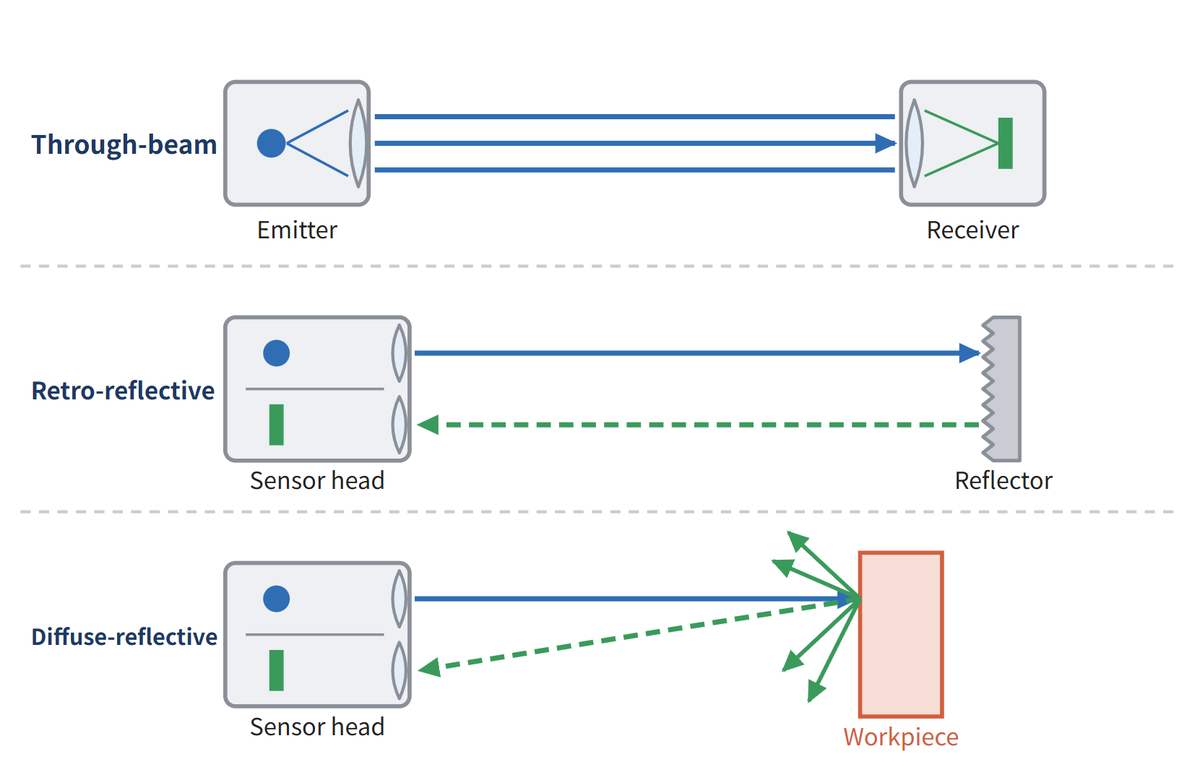
Photoelectric Sensor Types and How to Choose: Through-Beam vs. Retro-Reflective vs. Diffuse-Reflective
An easy explanation of the three basic types of photoelectric sensor (through-beam, retro-reflective, and diffuse-reflective) based on how the amount of received light changes. It also covers how to choose for transparent, black, and mirror-like workpieces, when to use distance-settable types and laser sensors, and the order for selecting a sensor.
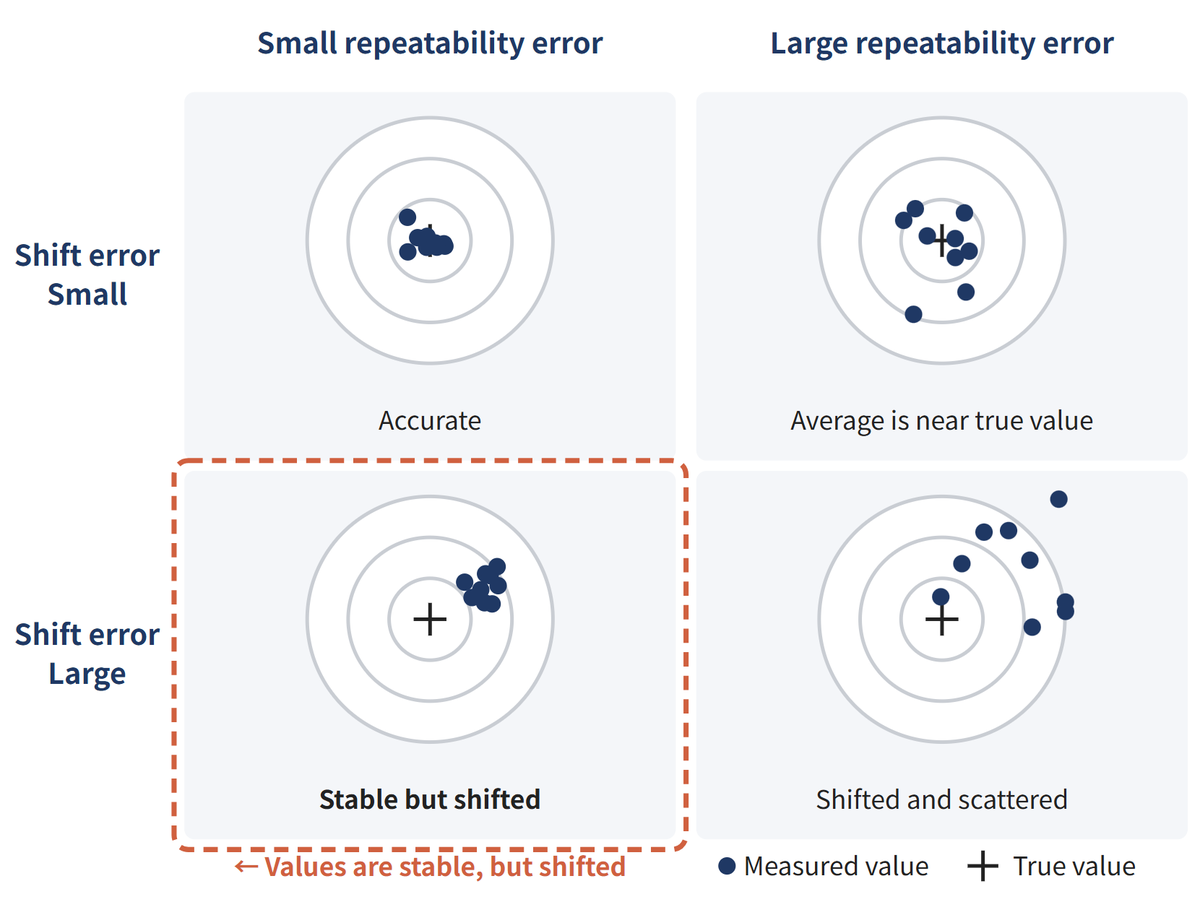
Repeatability vs. Linearity vs. Resolution: How to Read a Sensor Specification Sheet
Repeatability, linearity, and resolution on a sensor specification sheet all look like “accuracy,” but each answers a different question. Based on the Official Handbook of the Practical Sensor Certification, this article explains what the three values mean and how to check the conditions (notes) attached to them.
Photoelectric Sensor Detection Errors and Chattering: Causes and Fixes, Starting from the Symptoms
A photoelectric sensor reacts when no workpiece is present, misses one that is, or its output keeps switching ON and OFF. This article sorts the causes of these detection errors into three groups by which received-light value has shifted, and explains how to choose a fix from the symptoms.
To learn more about the topics in these articles, see the Official Handbook. You can test what you have learned with the Practical Sensor Certification.